
Your loved one is finally cleared to leave the hospital. You’re relieved, of course, but there’s probably a knot in your stomach too. Who helps with bathing? Who makes sure the medicines are taken on time? What if something goes wrong at 2 am?
Those worries are completely normal. Stroke recovery doesn’t end when the hospital stay does. For most people, it’s a long road that continues at home, and the kind of support they get along the way matters a lot. This guide walks through what to expect and how in-home care can help.
Quick Summary:
JGC Healthcare offers in-home care and skilled nursing for seniors, so families have trusted help during stroke recovery at home. Talk to our team.
What Stroke Recovery Looks Like After You Leave the Hospital
No two strokes are the same, so no two people go through stroke recovery the same way. Some regain strength fairly quickly. Others deal with weakness on one side, trouble speaking, memory problems, or difficulty swallowing. Tiredness and low mood are common too.
Most people go home with a plan from their doctors, which might include therapy, medication, and follow-up visits. The hard part is carrying that plan out every single day, especially when the family is also juggling work, kids, and everything else.
Why Families Choose In-Home Care for Stroke Recovery
Familiar Surroundings
Home is where your loved one knows where everything is. The favorite chair, the kitchen, the daily routine. For many seniors, being somewhere familiar is calming, and feeling calmer can make it easier to stay motivated with exercises and daily tasks.
One Person, Full Attention
In a hospital or facility, staff look after many patients at once. At home, a caregiver can focus on one person, notice small changes, and respond quickly.
A Steady Daily Routine
Regular meals, medicines, rest, and gentle activity all help. A caregiver can keep that rhythm going, which is often tough for family members to do alone.
How In-Home Care Supports Stroke Recovery Day to Day
Help With Daily Activities
Bathing, dressing, getting to the bathroom, preparing meals, moving around the house safely. Tasks like these can feel overwhelming after a stroke. Our home care service covers this kind of everyday help, so your loved one keeps their dignity while staying safe.
Medication Management
Many people recovering from a stroke take several medicines, such as blood pressure drugs or blood thinners. Missing a dose or doubling up can be risky. A caregiver can remind, keep track, and flag anything that seems off to the family or the doctor.
Skilled Nursing When It’s Needed
Some situations call for a trained nurse, not just a helping hand. Our skilled nursing services can add medical monitoring and clinical support to the care plan, which is often useful in the early weeks of stroke recovery.
Backing Up Therapy Goals
Physical, speech, and occupational therapists set the exercises. A caregiver can’t replace them, but they can encourage your loved one to keep practicing between sessions and share notes on how things are going.
Preventing Falls
Weakness and balance problems raise the risk of falls. A caregiver can help with walking and transfers, and spot hazards like loose rugs or poor lighting.
The Emotional Side of Stroke Recovery
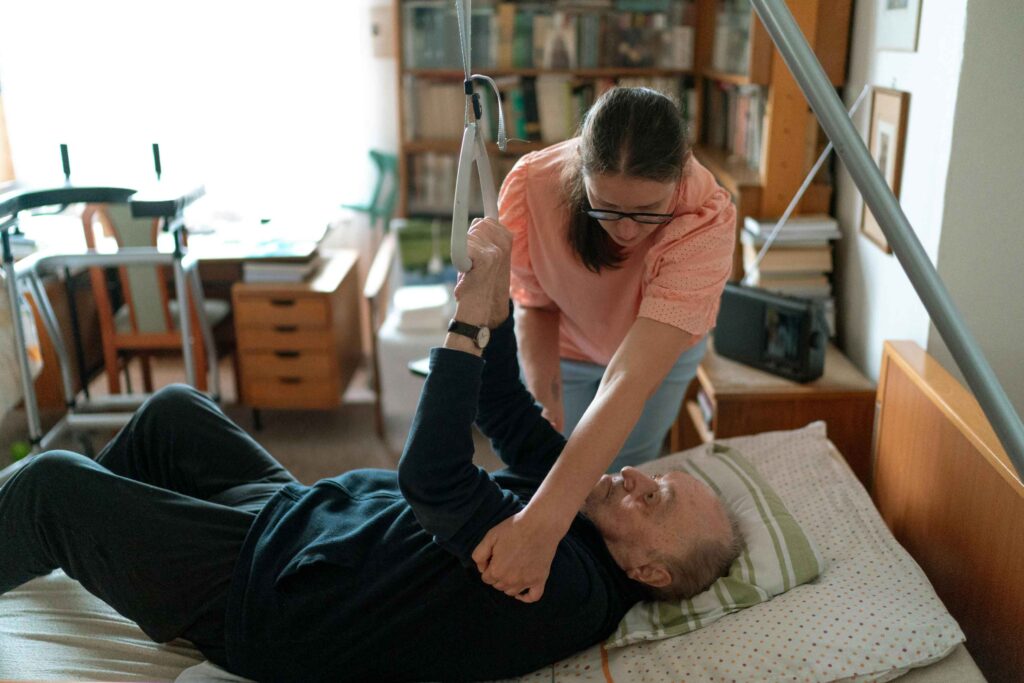
Frustration, anxiety, and sadness are common after a stroke. Someone who always did everything for themselves may suddenly need help buttoning a shirt. That’s hard. Having a kind, patient person around, someone to talk with or just sit beside, can make the days feel lighter.
Family caregivers need a break too. Burnout is real, and it helps everyone when the load is shared.
Signs Your Loved One May Need More Help at Home
Keep an eye out for:
- Missed or mixed-up medications
- Falls or near-falls
- Skipped meals or weight loss
- Pulling away from family and activities
- An exhausted family caregiver
If you notice more than one of these, it’s probably time to talk with the doctor and look at extra support.
How to Choose In-Home Care for Stroke Recovery
Not every provider is the right fit, so ask a few direct questions. Do they begin with a proper assessment of physical, emotional, and social needs? Will they build a personalized care plan? Do they work with your loved one’s doctors? How long have they been doing this?
At JGC Healthcare, we’ve provided in-home care for over 15 years, and we coordinate with healthcare providers so everyone stays on the same page.
One important note: if you ever see sudden signs of a new stroke, such as a drooping face, arm weakness, or slurred speech, call emergency services right away. Don’t wait for a caregiver or a scheduled visit.
Conclusion
Stroke recovery takes patience, and no one should have to go through it alone. With the right combination of daily assistance, medical support, and compassionate companionship, many families find that recovering at home can provide comfort, familiarity, and peace of mind. If you’re exploring care for yourself or a loved one, visit JGC Healthcare
FAQ’s
How long does stroke recovery take?
It varies a lot from person to person. Many people see the fastest progress in the first few months, but improvement can continue for a year or longer. Your doctor and therapists can give you a clearer picture.
Is it safe to recover from a stroke at home?
For many people, yes, as long as their doctors agree and the right support is in place. That usually means help with daily tasks, medication oversight, and access to nursing care when needed.
What does an in-home caregiver do for stroke survivors?
They help with bathing, dressing, meals, and moving around safely, remind about medicines, encourage prescribed exercises, and offer company. Nurses can add medical care when it’s needed.
Does in-home care replace therapy?
No. Therapy is still led by licensed therapists. In-home care supports it by keeping your loved one safe, rested, and encouraged between sessions.
