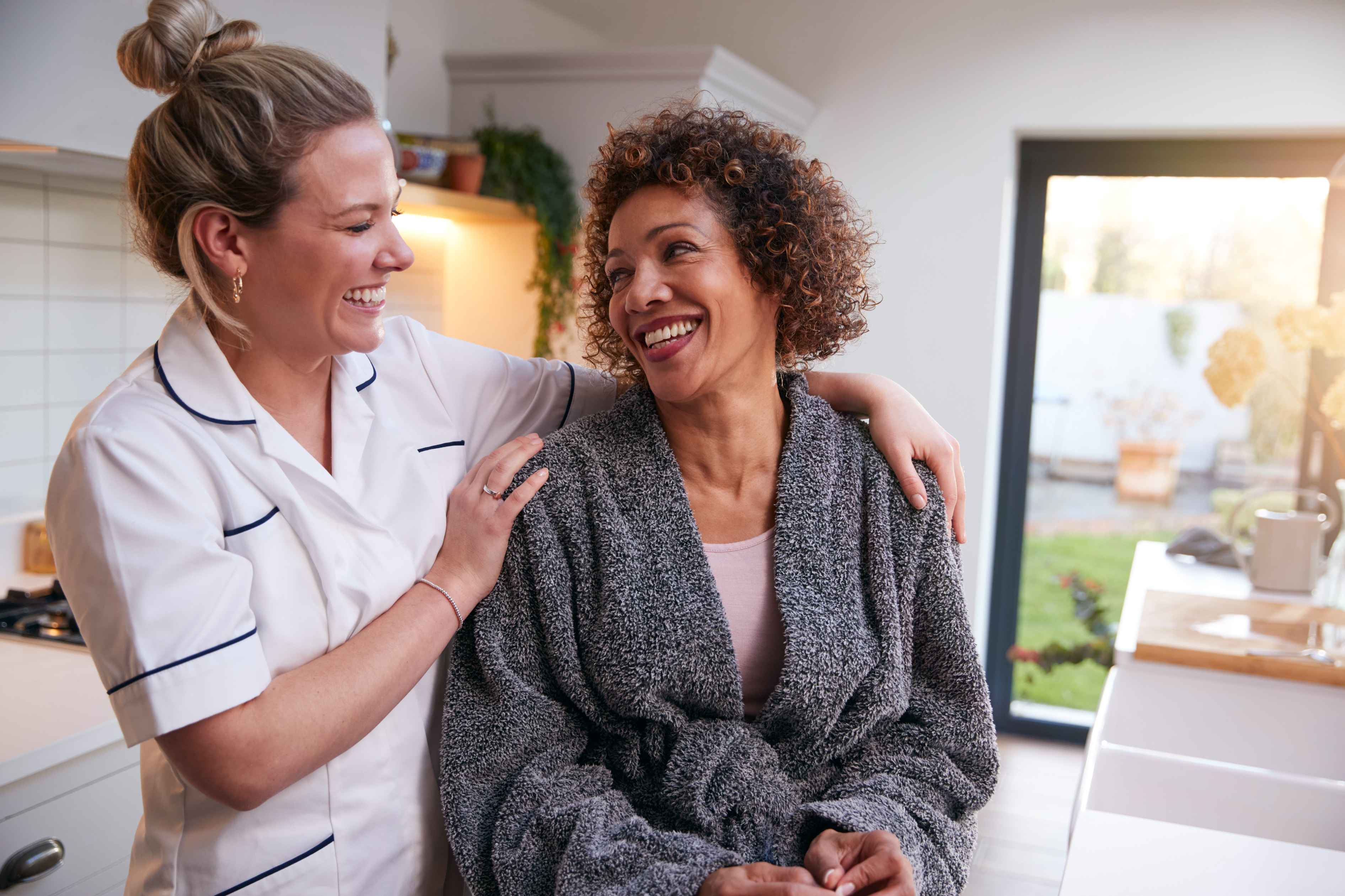
The moment a family realizes a loved one needs more support than they can provide alone, the first instinct is often to start researching facilities. What most families discover when they look more carefully is that the better option was available at home the entire time. Professional home care options have expanded significantly, and the clinical quality now available in a home setting matches or exceeds what most facilities offer for non-acute needs. The question is no longer whether home care is a real alternative. It is the home care option that fits the situation.
Quick Summary: Understanding Your Home Care Options
Home care options range from skilled nursing and clinical monitoring to personal care, companionship, and family caregiver relief. The right combination depends on the individual’s medical needs, daily living requirements, and how much family support already exists around them. JGC Healthcare provides comprehensive home care options across Virginia with licensed caregivers, consistent staffing, and 24/7 registered nurse access. Contact JGC Healthcare here to discuss the right arrangement for your family.
Why More Families Are Choosing Home Care Options
The shift toward home-based care is not just a preference. It is supported by outcomes data that consistently show people recover faster, maintain cognitive function longer, and report significantly better quality of life when they receive care in a familiar environment rather than an institutional one.
For older adults specifically, the disruption of moving into a facility, leaving behind decades of routine, familiar surroundings, and community, accelerates decline in ways that are measurable but rarely discussed during the facility tour. Home care options preserve that continuity. The same home, the same neighborhood, the same daily rhythm, with professional support built around it rather than replacing it.
Skilled Nursing at Home
The most clinically intensive of the available home care options, skilled nursing brings licensed clinical professionals directly into the home for conditions that would otherwise require a facility or frequent hospital visits. Wound care, IV therapy, medication administration, ventilator management, catheter care, and health monitoring for complex chronic conditions all fall within this category.
Skilled Nursing Services places Virginia-licensed nurses with specialist certifications, including IV therapy, wound management, and ventilator care, into home settings. For medically complex patients whose families have been told a nursing facility is the only option, skilled home nursing frequently makes staying home not just possible but clinically safer.

Personal Care and Daily Living Support
The most widely needed of all home care options is daily personal care. Bathing, grooming, dressing, meal preparation, mobility assistance, and medication reminders are the tasks that become difficult as health declines, but do not require a licensed clinician to perform safely and with dignity.
| Personal Care Home Care Options | What They Cover |
| Personal hygiene support | Bathing, grooming, dressing, oral care |
| Meal preparation | Planning, cooking, and feeding assistance |
| Mobility and transfer assistance | Safe movement, fall prevention, walking support |
| Medication reminders | Prompting at the right time, not administering |
| Light household tasks | Laundry, cleaning, errands |
Home Care Services delivers this daily support through consistent caregivers who build a real relationship with the person they are caring for, rather than rotating through unfamiliar faces every week.
Pediatric Home Care Options
Home care options are not exclusively for seniors. Children with complex medical needs, developmental conditions, or post-surgical recovery requirements benefit enormously from receiving care at home rather than in a clinical facility. The familiar environment supports both the child and the family around them.
JGC Healthcare’s Pediatric Care Services provide specialized support for medically complex children with nurses holding PALS certification and experience in tube feeding, tracheostomy care, and advanced medication management. For families who have been managing these needs alone, this home care option removes an enormous burden without requiring any disruption to the child’s home environment.
Senior Care and Elderly-Specific Support
Aging brings a specific set of needs that general home care options do not always address with enough depth. Cognitive decline, reduced mobility, social isolation, and the management of multiple simultaneous chronic conditions require caregivers with experience in age-specific care rather than general personal support.
Elderly Care Services provide attentive daily support structured around the individual senior’s routine, preferences, and specific health requirements. And for seniors whose needs extend into clinical monitoring at home, Home Elderly Nursing combines personal care with skilled nursing oversight in a single coordinated arrangement.
Companionship as a Home Care Option
Isolation is a clinical risk that physical care alone does not address. Seniors and individuals with disabilities who are physically cared for but socially disconnected decline faster than those who have consistent, meaningful interaction built into their day. Companionship is not a soft add-on to the home care options available. It is a health intervention.
JGC Healthcare’s Personal Companion Services provide structured social engagement, shared activities, and consistent presence as a dedicated part of the care arrangement. For families whose loved one has everything they need physically but is visibly declining in spirit, this is often the home care option that changes the trajectory.
Respite Care for Family Caregivers
The most overlooked of all home care options is the one designed for the caregiver rather than the patient. Family members absorbing the full load of caregiving without relief reach burnout faster than anyone plans for, and burned-out caregivers provide worse care, regardless of how much they love the person they are caring for.
JGC Healthcare’s Respite Care Services give family caregivers structured, reliable time off on a schedule that works for the whole family. Not emergency coverage when things fall apart, but planned relief that prevents the burnout before it develops.
Conclusion
The home care options available today cover everything from complex clinical nursing to daily personal support, companionship, and family caregiver relief. For most families, the right answer is a combination of several of these rather than a single service, coordinated through one provider, so nothing falls through the gap between them.
JGC Healthcare has been delivering comprehensive home care options across Virginia since 2015, with licensed caregivers, consistent staffing, and 24/7 access to a registered nurse as standard. Contact JGC Healthcare here to talk through which combination of home care options makes the most sense for your family.
FAQ’s
What are the main home care options available for seniors?
Skilled nursing, personal care, elderly-specific support, companionship, and respite care for family caregivers are the core categories, and most families benefit from a combination of several.
Can home care options replace a nursing facility for complex medical needs?
For many conditions, yes. Skilled home nursing covers wound care, IV therapy, ventilator management, and chronic disease monitoring at a clinical level that most families do not realize is available outside a facility.
How quickly can home care options be put in place?
Most arrangements can begin within a few days. Urgent situations are often accommodated within 24 to 48 hours, depending on the level of care required.
Does insurance cover home care options?
Skilled nursing qualifies for Medicare when physician-ordered and homebound criteria are met. Personal care and companion services are typically funded through Medicaid waiver programs, long-term care insurance, or privately.
How do I know which home care option is right for my loved one?
Start with an honest assessment of what they can and cannot manage independently. Clinical needs point toward skilled nursing. Daily living needs point toward personal care. Social and emotional needs point toward companionship. Most situations involve more than one.
