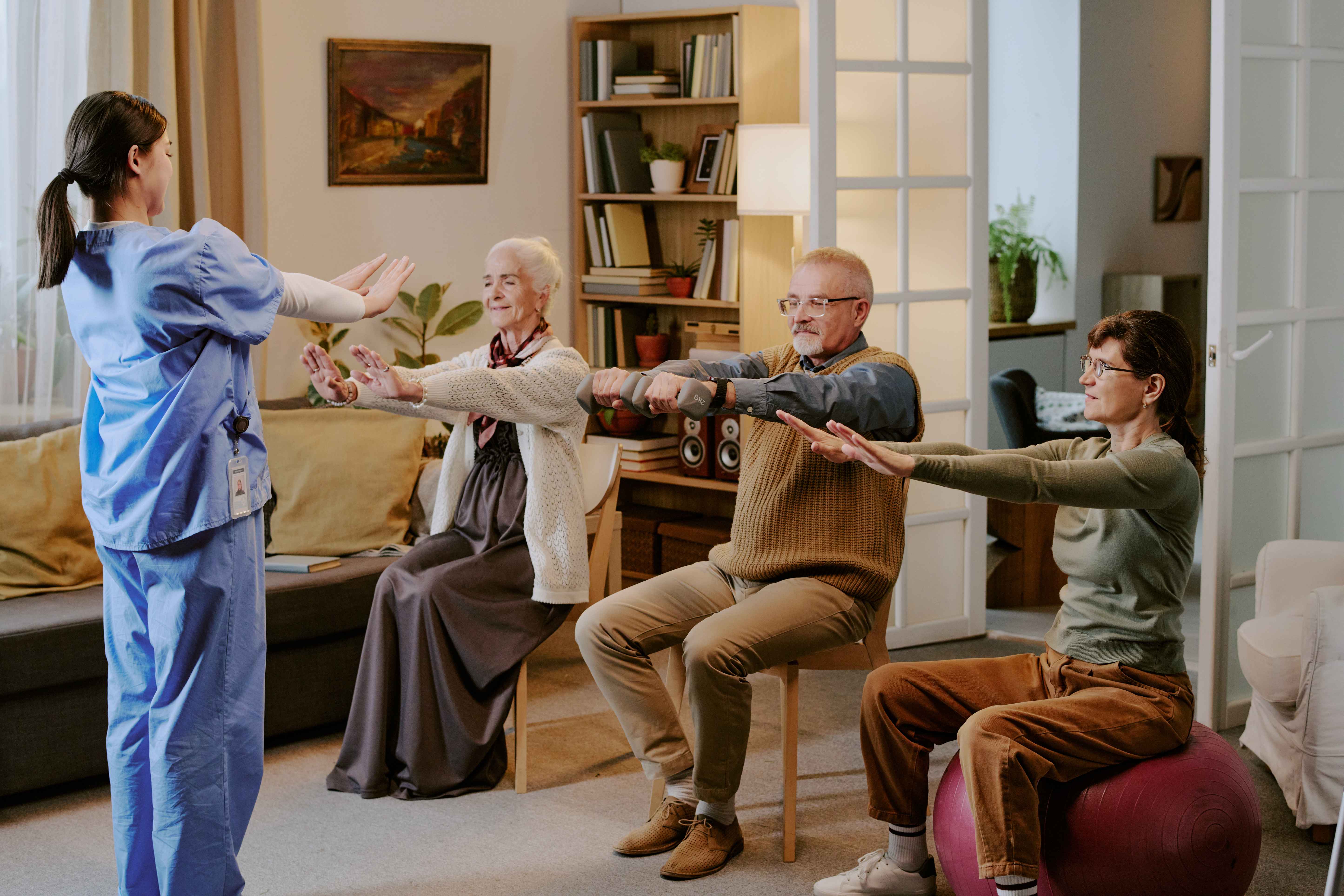
Staying active gets harder when standing for long periods feels risky. Stiff knees, tired legs, and a fear of falling can keep a person on the couch for days. The good news is that Chair Exercises for Seniors let people move safely from a seat, with support close by and nothing complicated to set up.
Quick Summary: Chair Exercises for Seniors
JGC Healthcare helps seniors stay mobile at home with nursing oversight, friendly companionship, and daily support that makes gentle movement feel safe. Reach out to our team.
Why Chair Exercises for Seniors Work So Well
Safer Than Standing Workouts
A sturdy chair gives balance and a place to rest. That removes much of the fear that stops older adults from trying anything at all.
Gentle on Joints
Seated movement puts less strain on hips, knees, and ankles. People with arthritis or limited stamina can usually manage it without pain flaring up, which makes it easier to stick with week after week.
What You Need Before You Start
Pick a chair with a firm seat, a straight back, and no wheels. Keep it on a non-slip floor, wear supportive shoes, and keep water nearby. Check with the doctor first if there’s heart disease, recent surgery, or uncontrolled blood pressure.
A Simple Routine to Try
Aim for ten to fifteen minutes, three or four days a week. Slow and steady beats fast and sloppy every time, and there’s no rush to add more.
Warm-Up for the Upper Body
Roll the shoulders backward ten times, then gently turn the neck side to side. Reach both arms overhead and stretch tall. This wakes up stiff muscles before anything harder.
Leg and Core Movements
Lift one knee at a time as if marching in place. Straighten a leg out in front and hold for a few seconds. Sit tall and gently twist the torso. These build the strength needed for standing up and walking steadily.
Cool-Down
Finish with slow breaths and a gentle stretch for the arms and legs. Don’t skip it, since it helps muscles recover.
Quick Reference Guide
Here’s a short look at what each movement does.
| Movement | Main Benefit | How It Helps Chair Exercises for Seniors |
| Seated marching | Leg strength | Builds power for standing and walking |
| Arm raises | Shoulder mobility | Makes reaching and dressing easier |
| Ankle circles | Circulation | Reduces stiffness in the feet |
| Seated twists | Core flexibility | Improves posture and stability |
When Movement Needs Medical Backup
Some seniors manage heart conditions, diabetes, or recovery from surgery. For them, Chair Exercises for Seniors should happen with guidance on safe limits, warning signs, and pacing.
The Skilled Nursing Services team can monitor vital signs and help adjust activity to match health needs.

Having Someone Nearby Changes Everything
Motivation fades quickly when you’re alone. A friendly person to count reps, chat, and cheer on progress turns exercise from a chore into something enjoyable. It also provides quiet reassurance that help is right there if needed.
The Personal Companion Services team offers that steady encouragement during routines and daily life.
Building Movement Into the Day
Exercise works best when it’s part of a normal routine. Do a few moves after breakfast, a few before lunch, and a few in the evening. Small bursts feel doable, and they add up. Many families find Chair Exercises for Seniors easier to keep up when the rest of the day is organized too.
The Home Care Services team can help with meals, tidying, and errands, leaving more energy for movement.
Care That Adapts as Needs Change
Mobility changes from week to week. What felt easy last month may be tiring today, or the other way around. Flexible support lets the routine shift without frustration.
The Elderly Care Services team adjusts care around the whole person, not just one goal.
Signs to Stop and Call the Doctor
Stop right away if you notice chest pain, sharp joint pain, dizziness, or trouble breathing. Mild muscle tiredness is normal, but pain is not. Chair Exercises for Seniors should never be pushed through discomfort, and a short rest is always the right call.
Conclusion
Movement doesn’t have to be intense to matter. With a sturdy chair, a short routine, and the right support, Chair Exercises for Seniors can improve strength, comfort, and confidence at home. See everything Home healthcare services offers to help keep your family healthy.
FAQ’s
Are Chair Exercises for Seniors safe for people with arthritis?
Usually yes, because seated movement is gentle on the joints. Check with a doctor first.
How often should seniors do them?
Three or four days a week is a good start, for about ten to fifteen minutes.
Do Chair Exercises for Seniors really improve mobility?
Yes, regular practice builds strength and flexibility that carry over into walking and standing.
Can someone with limited strength still take part?
Absolutely, since each move can be done smaller or slower.
When should a senior avoid exercising?
Skip it during illness, fever, or unexplained pain, and ask a doctor for guidance.
